







Why Choose the Agafay Desert?
I recommend the Agafay to couples who want the wow factor without the logistics nightmare of the actual Sahara. The real Sahara, Merzouga or Zagora, is an 8-hour drive from Marrakech. The Agafay sits just 40 minutes south of the city. Your guests can leave their Medina riad after lunch and be standing in the desert before tea. Agafay is technically a rocky plateau, not sand dunes. The terrain is golden-grey stone and scrub with the Atlas Mountains rising behind it, often with snow on the peaks. Several luxury camps have been purpose-built here specifically for weddings. The comfort level is genuine five-star. But I want to set expectations: this is not the cinematic Sahara of Lawrence of Arabia. It is more rugged, more raw, and in my opinion more interesting.
Top Agafay desert wedding venues
La Pause is the original and still the most popular. I have been there dozens of times. It is an eco-lodge with stone-and-mud bungalows, an infinity pool overlooking the desert, and open-air reception areas you can customise. Capacity goes up to 200 guests. Starting price is €3,000 per night for the whole property. The vibe is minimalist bohemian, lantern-lit pathways, fire pits, dinner under the stars. Scarabeo Camp is my pick for intimate weddings of 30 to 80 guests. Luxury glamping tents with proper bathrooms, a panoramic terrace restaurant, and a pool. Inara Camp is the most private option, with individual tented suites and a spa tent. Smaller capacity but very exclusive. Terre des Etoiles and Agafay Desert Luxury Camp also do weddings well. Every Agafay venue can arrange camel rides, quad biking, and horse riding for your guests the day before or after. These extras make the desert trip feel like more than just a venue visit.
Logistics and Practicalities
Good news first: all Agafay venues are reachable by normal car. Paved roads most of the way, then gravel. No 4x4 needed. The drive from central Marrakech is 30 to 45 minutes. Most venues arrange minibus shuttles for €200 to 400 per round trip for 15 to 20 guests. Private SUV transfers cost €40 to 60 per vehicle. Now the things people forget. The desert is 3 to 5°C cooler than the city during the day and much colder at night. Spring and autumn evenings drop to 10 to 15°C. Winter nights can hit 5°C. You need wraps or blankets for every guest at an outdoor reception, and heat lamps or fire pits are non-negotiable for winter weddings. Wind is the other factor I always flag. Agafay can get windy, especially in spring. Talk to your planner about backup options. Most venues have sheltered courtyard areas. On power: these camps run on generators. Confirm the capacity before your DJ shows up with a full concert rig. Honestly, the classic Agafay look, fairy lights, lanterns, candles, works better than heavy production anyway.
The desert wedding experience
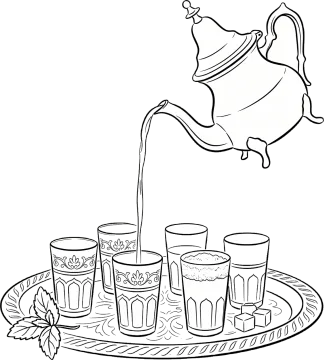
Let me walk you through what a typical Agafay wedding looks like, because it is unlike anything else. Late afternoon, your guests arrive by minibus. They step out into the desert and someone hands them chilled rose and mint tea on a terrace with nothing but open sky in front of them. The reaction is always the same: stunned silence, then phones out. Ceremony at sunset with the Atlas Mountains turning gold behind you. This is the photo every couple wants and the desert delivers it every single time. Between 5 and 7pm the light is extraordinary for portraits, warm and soft with long shadows. As the sun drops, the camp lights up with lanterns and fire pits. A Gnaoua musician or oud player plays while guests move to cocktails. Dinner is long communal tables, candles, dried flowers, Moroccan ceramics. Tagine and couscous served family-style. Above you, the sky is packed with stars because there is zero light pollution out here. Then the dancing starts in a Berber tent or on an outdoor floor. I have seen couples bring in fire dancers or drummers at midnight as a surprise. It always brings the house down.
Costs and budget planning
It looks like a million euros and costs far less than a Palmeraie palace wedding. Venue hire runs €3,000 to 15,000 per night for exclusive use. Most camps include accommodation for 20 to 40 guests in that rate. Catering is €60 to 120 per person, lower than city venues because many camps cook in-house with Moroccan menus. Decor is where you really save. The desert is your decor. Most couples spend on lanterns (€500 to 1,500), fire pits, and fairy lights instead of flowers. Photography costs the same as city weddings, €3,000 to 8,000, but every photographer I know loves shooting in Agafay. The light and landscape do half the work. Entertainment: Gnaoua musicians cost €800 to 2,000, a DJ runs €1,500 to 3,000. Budget €1,000 to 3,000 for guest transfers from Marrakech. The total for a 60-person desert wedding lands at €25,000 to 55,000. That is roughly 20 to 30% less than a comparable celebration in the Palmeraie. I think it is the best value in Marrakech right now.
Best season for a desert wedding
March to May and September to November are the months I recommend. Daytime temperatures sit at 20 to 30°C, nights at 12 to 18°C. The light is perfect for photography. If I had to pick one single month, it would be October. Warm days, cool evenings, almost no wind, and the Atlas peaks often have their first snow. The contrast of desert heat and snow-capped mountains behind you is spectacular. June is borderline. Daytime hits 35°C+ but evenings are fine. July and August, I would not do it unless your entire event starts after 7pm. December to February gives you mild days at 16 to 22°C but cold nights at 5 to 10°C. Doable with proper heating, but it requires more planning. One more thing: avoid Moroccan public holidays and the week of Eid. Many venues and vendors are fully booked or simply closed.
Planning from abroad? Wedding in Marrakech: the complete guide
Related Tools
Related guides
Keep planning
Two tools couples use to turn this into a real plan.
Estimate your Marrakech budget
Pick a venue, guest count and style. See a realistic total in under a minute.
Open the budget simulatorarrow_forward
Find a planner you can trust
Every wedding planner in Marrakech we have written about, each with a written profile. No scores, no paid placement.
Browse the planner directoryarrow_forward